The Bounce-Back Myth: What Really Happens When Teams Get Embarrassed on National TV
It's one of the most universal instincts in sports fandom. Your team just got demolished. Maybe it was a primetime game, maybe it was a rivalry matchup, maybe it was the kind of loss where the coach looked like he wanted to disappear into the tunnel and never come back. And almost immediately, the narrative starts forming: they're going to be fired up next week.
This idea — that humiliation generates motivation, which generates performance — is deeply wired into how we think about sports. Coaches talk about it in press conferences. Analysts build entire segments around it. And bettors? Bettors act on it constantly, hammering teams coming off embarrassing defeats as if the emotional storyline is a guaranteed path to the cover.
But is any of it actually real? And if it is, are the sportsbooks already pricing it in?
The Psychology Is Real. The Edge Might Not Be.
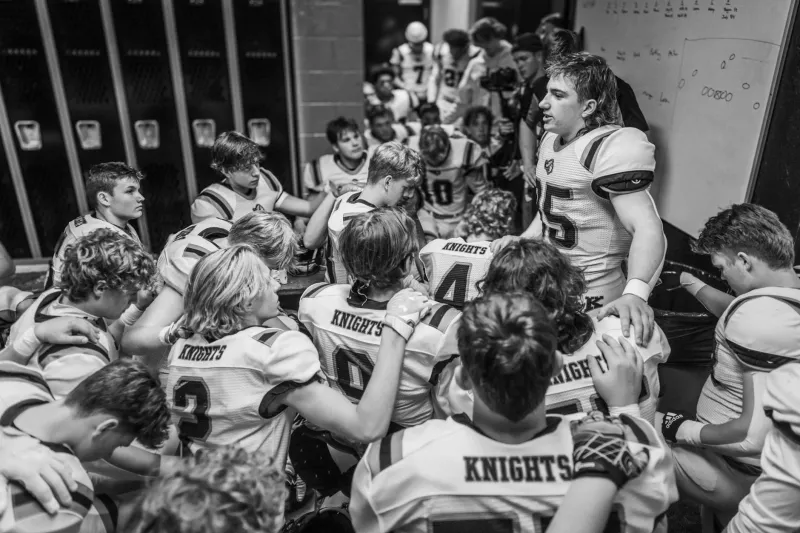
Let's start with what's actually true. Teams do sometimes play with elevated intensity following a bad loss. The locker room conversations are real. The extra film sessions happen. Coaches absolutely gameplan differently when they feel their team was exposed. Player motivation is a genuine variable in athletic performance.
The problem is that sportsbooks know all of this. The "revenge game" narrative is one of the most widely discussed concepts in sports betting, which means it's one of the most heavily priced concepts. When a team comes off a blowout loss, the public floods in on that team the following week. Lines adjust. The value that might have existed gets squeezed out before most casual bettors even place their wager.
This is the core trap of the revenge spot: by the time it's obvious enough for the public to see it, the edge is usually gone. What you're betting on isn't the team's actual performance — you're betting on a narrative that's already been priced into the line.
Where the Real Exploitable Pattern Lives
Here's where it gets interesting. The revenge spot as commonly understood — bet the team that just got crushed — is largely a losing proposition over large sample sizes. But there's a related pattern that sharp bettors have been exploiting for years, and it works in the opposite direction.
The opponent of the team coming off an embarrassing loss is often mispriced.
Think about it. A team just dominated their opponent by four touchdowns. The public looks at that game and thinks: this team is rolling, they're playing great, they're a great bet this week. But what actually happened? The dominant team may have caught their opponent in a terrible spot — a short week, missing key players, coming off a long road trip. The blowout reflected situational factors more than a genuine talent gap.
Meanwhile, the team that got blown out is now a public fade. Nobody wants to bet on them. The line moves in the dominant team's favor, even though the dominant team is now potentially facing a fully healthy, properly prepared opponent who has had a full week to get their act together.
The exploitable spot isn't the revenge angle. It's the overreaction to the score angle.
Football: When Coaches Scheme, Not React
In the NFL specifically, the post-blowout dynamic plays out in a particularly interesting way at the coaching level. When a team gets exposed badly — say, their offensive line gets destroyed, or their secondary gets torched deep repeatedly — the coaching staff doesn't just "get motivated." They spend the entire week specifically patching the holes that were exploited.
This means the same exploits that worked so well in the blowout often don't work the following week. The defense has been specifically coached to take away what hurt them. The offensive adjustments are targeted at the exact weaknesses the opponent exposed.
This creates a scenario where the team that just dominated sometimes faces a significantly better-prepared version of the opponent they destroyed. If the public is still pricing the dominant team as if last week's performance is a reliable indicator of this week's matchup, that's a genuine inefficiency.
Basketball and Baseball: Different Sports, Same Principle
The NBA version of this is particularly interesting because the schedule is so compressed. Teams play three or four games a week, which means there's almost never enough time to fully "scheme" a response. In basketball, the bounce-back game is more about energy and effort than tactical adjustment.
What research on NBA bounce-back games consistently shows is that teams coming off blowout losses don't significantly outperform expectations in their next game. What does happen is that they often outperform public expectations — because the public has faded them so hard that the line has moved past where it should be.
Baseball's version is even more stripped down. A team that just got no-hit or gave up fifteen runs isn't going to dramatically overhaul its approach in 24 hours. The sport's daily schedule makes the revenge narrative almost meaningless from a preparation standpoint. What matters is pitching matchups, rest days, and the underlying quality of both rosters — none of which change because of last night's score.
Betting the Sentiment, Not the Story
The practical framework here is about understanding where public money is going and why, then evaluating whether the line accurately reflects the actual game rather than the emotional narrative surrounding it.
When a high-profile blowout happens, ask these questions before you make a move:
Is the public piling onto the losing team because of a genuine improvement in their situation, or just because of the revenge narrative? Is the dominant team being undervalued because the public sees them as a lock, when in reality they're facing a more prepared opponent? Does the line movement over the week suggest sharp money is actually on the "motivated" team, or is it all public sentiment?
The answers won't always point in the same direction. But they'll get you thinking about the game as a game rather than as a story — and that shift in perspective is exactly where the edge lives.