When Stars Go Down: How Early-Season Injuries Open Betting Windows That Won't Last Long
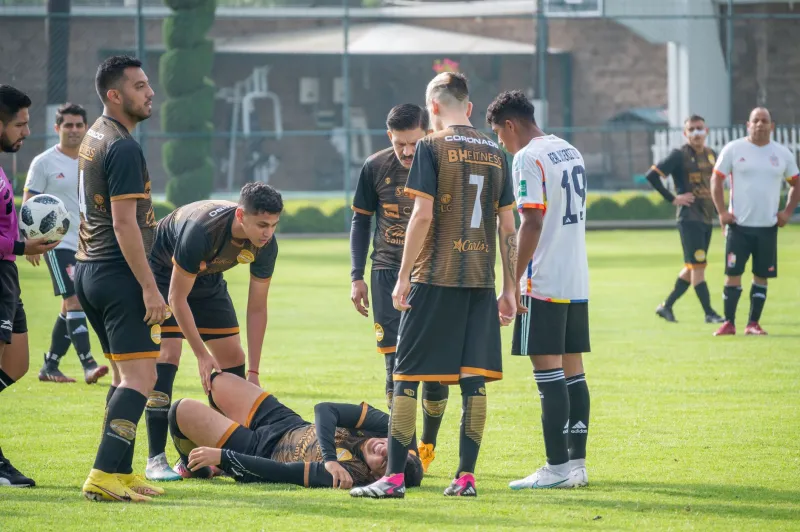
There's a specific moment every serious bettor learns to love — and it's not when the odds look clean and obvious. It's the moment a beat reporter tweets out a cryptic injury update at 9 PM on a Tuesday, and you can practically hear the sportsbook algorithms scrambling to recalibrate.
Early-season injuries are one of the most underrated edges in sports betting. Not because they're secret — everyone sees them — but because the market's reaction is almost always wrong in the first 24 to 72 hours. And that window? That's where the money lives.
Why the Model Hasn't Caught Up Yet
Here's the thing people forget about sportsbooks: their pricing models are built on historical data. A lot of it. And early in any season, that data pool is shallow. Oddsmakers are essentially working with sample sizes that would make any statistician cringe — a handful of games, a new coaching staff, maybe a roster that looks nothing like last year's.
When a key player goes down under those conditions, the books are essentially guessing. They'll move the line, sure. But how much? In which direction? Against which opponent? These are genuinely hard questions when the model hasn't had time to establish a reliable baseline for this version of the team.
Contrast that with a mid-December injury to the same player. By then, the sportsbook has ten weeks of data. It knows how the backup performs. It knows how the offense adjusts. It knows the coaching tendencies. The line move is precise because the model is informed. Early in the year? Not even close.
The NFL: Where This Plays Out Most Dramatically
No sport creates bigger early-season value windows than the NFL. The reasons stack up fast. There are only 17 regular season games, meaning each individual contest carries enormous weight. Rosters are dramatically different from preseason to Week 1. And the injury timeline — practice reports, questionable tags, game-time decisions — creates a rolling fog of uncertainty that casual bettors navigate terribly.
When a starting quarterback goes down in Week 1 or 2, public money floods toward the opponent. That's predictable. But here's what's less obvious: the books often overcorrect to absorb that public action, moving the line further than the actual talent gap justifies. Backup quarterbacks in the modern NFL — especially in pass-heavy systems — are more capable than they were a decade ago. The market doesn't always price that in fast enough.
Same logic applies to offensive linemen. Losing a Pro Bowl left tackle sounds catastrophic. The public treats it that way. But if the team has a mobile quarterback and a strong running game, the adjustment is far less severe than the line movement suggests. That's a live number to fade.
NBA: The Rotation Chaos Nobody Talks About
Basketball has its own version of this problem, and it's arguably more exploitable. Early in the NBA season, load management is unpredictable, rosters are still being figured out, and coaches haven't settled into their rotation patterns yet.
When a star player is ruled out on short notice — especially in October or November — the line moves fast and often too far. The reason is simple: the public knows the star's name and doesn't know the backup's name. The books are pricing public perception as much as they're pricing reality.
But here's the edge. In today's NBA, teams are built with redundancy. A team that loses its second-best player early in the season might actually play more cohesively in the short term because the ball movement becomes cleaner and role players get more defined responsibilities. That's not always true, but it happens enough that blindly fading injury-impacted teams is a losing strategy — and betting them at inflated numbers is often a winning one.
Which Injuries Actually Move the Needle
Not every injury creates an exploitable mispricing. You need to be surgical about this.
High-impact, exploitable scenarios:
- Starting quarterbacks (NFL) replaced by unproven backups with no recent game tape
- Point guards who run the entire offensive system (NBA) — not just scorers, but facilitators
- Starting pitchers in MLB playoff races where the rotation depth drops off a cliff
- Offensive linemen in run-first offenses where scheme depends heavily on specific blocking assignments
Lower-impact, often overreacted to:
- Wide receivers in multiple-option passing offenses
- Power forwards who share minutes with capable backups
- Relief pitchers (the public dramatically overvalues individual relievers)
- Running backs in committee systems — losing one back rarely changes the math as much as it looks like it should
The key question to ask every single time: Does this team's system require this specific player, or does it require a player at this position? Those are very different things, and the line rarely reflects the nuance.
The Timing Game
Identifying the right bet is only half the battle. Timing your entry matters just as much.
The optimal window is typically 12 to 36 hours after a significant injury is confirmed. That's when public overreaction has pushed the line to its most distorted point, but before sharp money has fully corrected it. If you wait too long, the value gets squeezed out. If you jump in immediately, you might be ahead of the movement and miss a better number.
Watch for line reversals. If a line moves five points on an injury announcement and then creeps back two points over the next day, that's sharp money saying the market overcorrected. Follow that signal.
The Mindset Shift That Makes This Work
The hardest part of playing injury angles isn't finding the value — it's trusting it. Human instinct says a team without its best player is worse. That's true. But worse by how much, and is that already priced in? Those are the real questions.
The bettors cleaning up on early-season injury spots aren't doing anything mystical. They're just asking better questions than the market is, and they're doing it faster. The window doesn't stay open long. Oddsmakers learn. Lines tighten. The edge shrinks.
But early in the season, when the models are thin and the public is reactive? The chaos is real — and it's yours to exploit if you're paying attention.